SplitIt
Splits a group bill from a photo of the receipt.
- Role
- Solo, end to endDesign, frontend, backend, infrastructure
- Users
- 10+ dailyPeople splitting real bills
- Status
- Livesplit-it-nine.vercel.app
- Receipt reading
- Gemini APIItems, tax and fees read off a photo
- Backend
- AWS LambdaBehind API Gateway, paid per request
- Data
- MySQLAccounts, groups and split records
The bill nobody wanted to split
I share a flat, and most weeks my roommates and I spend money together: groceries, trips, restaurants. Splitting it was always the last thing anyone got to.
By the time someone finally posted the bill, nobody remembered who had what. People pushed back on the items they'd been given, charged for more than they had or, now and then, for less. SplitIt exists so the split happens at the table, from the receipt itself.
The photo does the typing
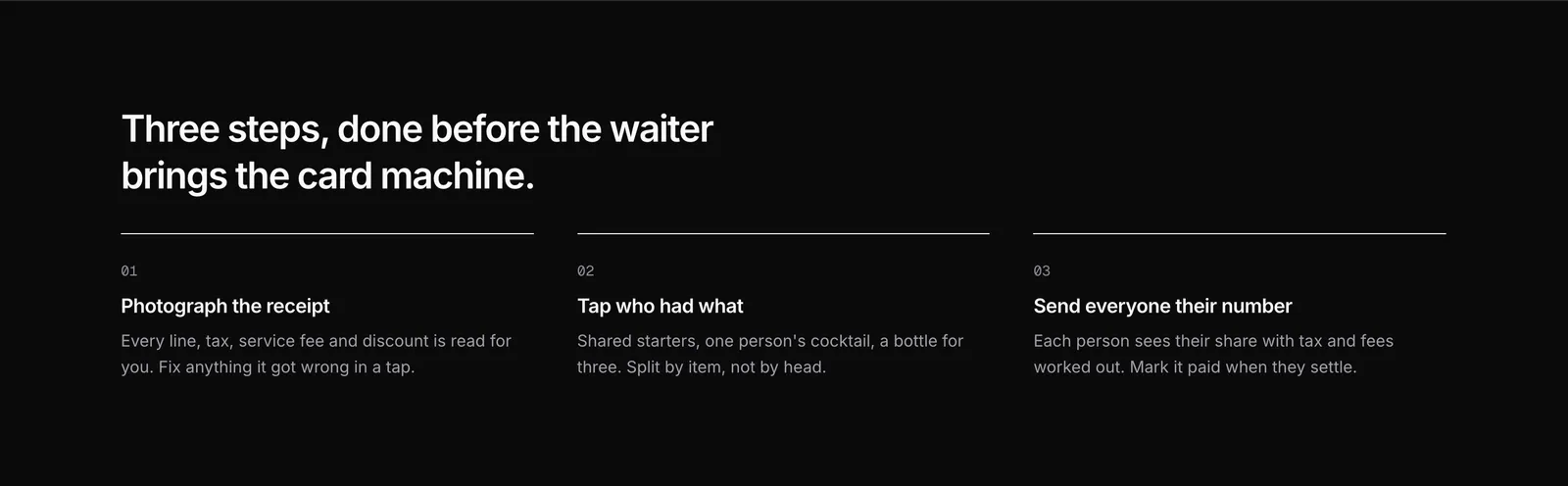
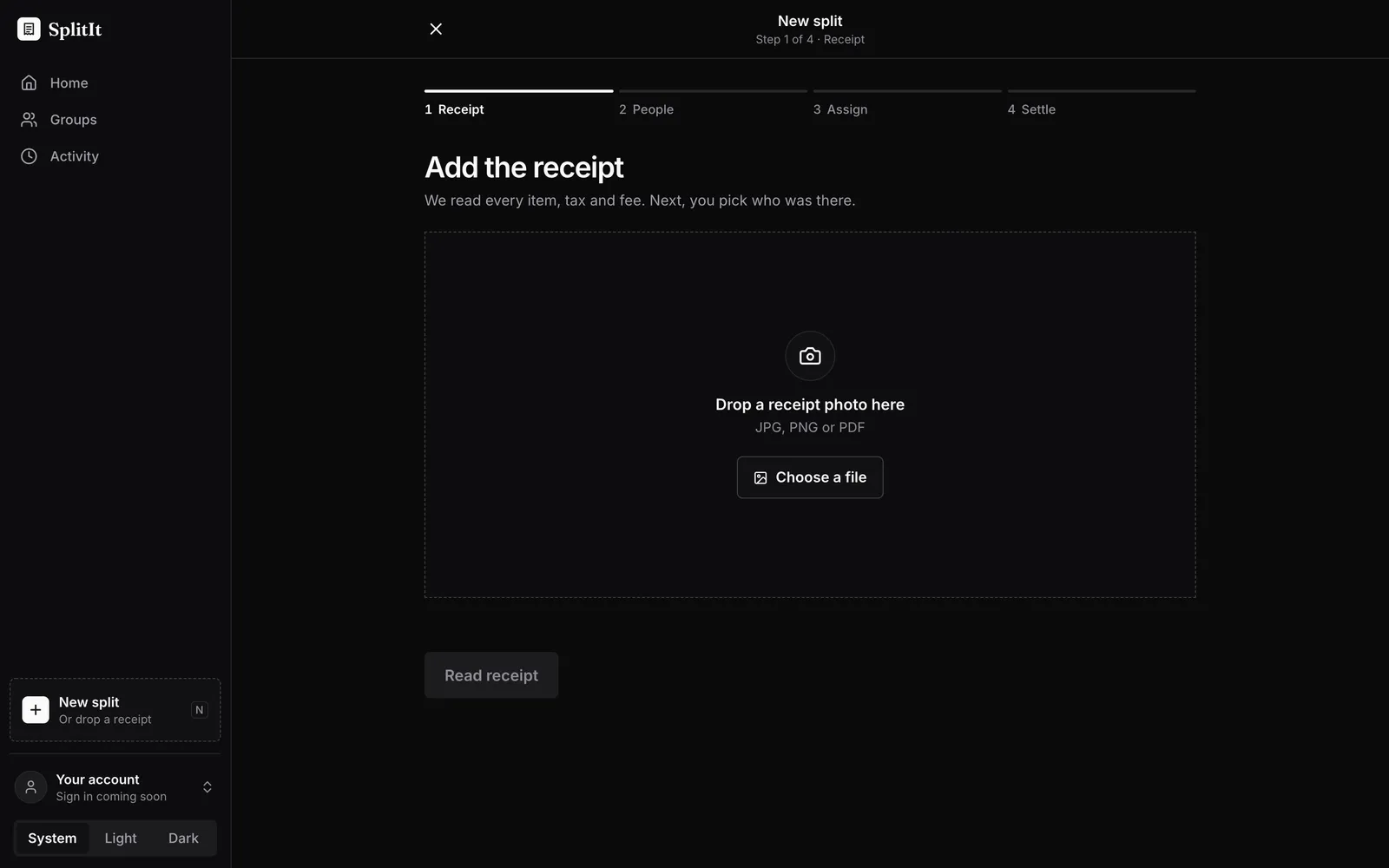
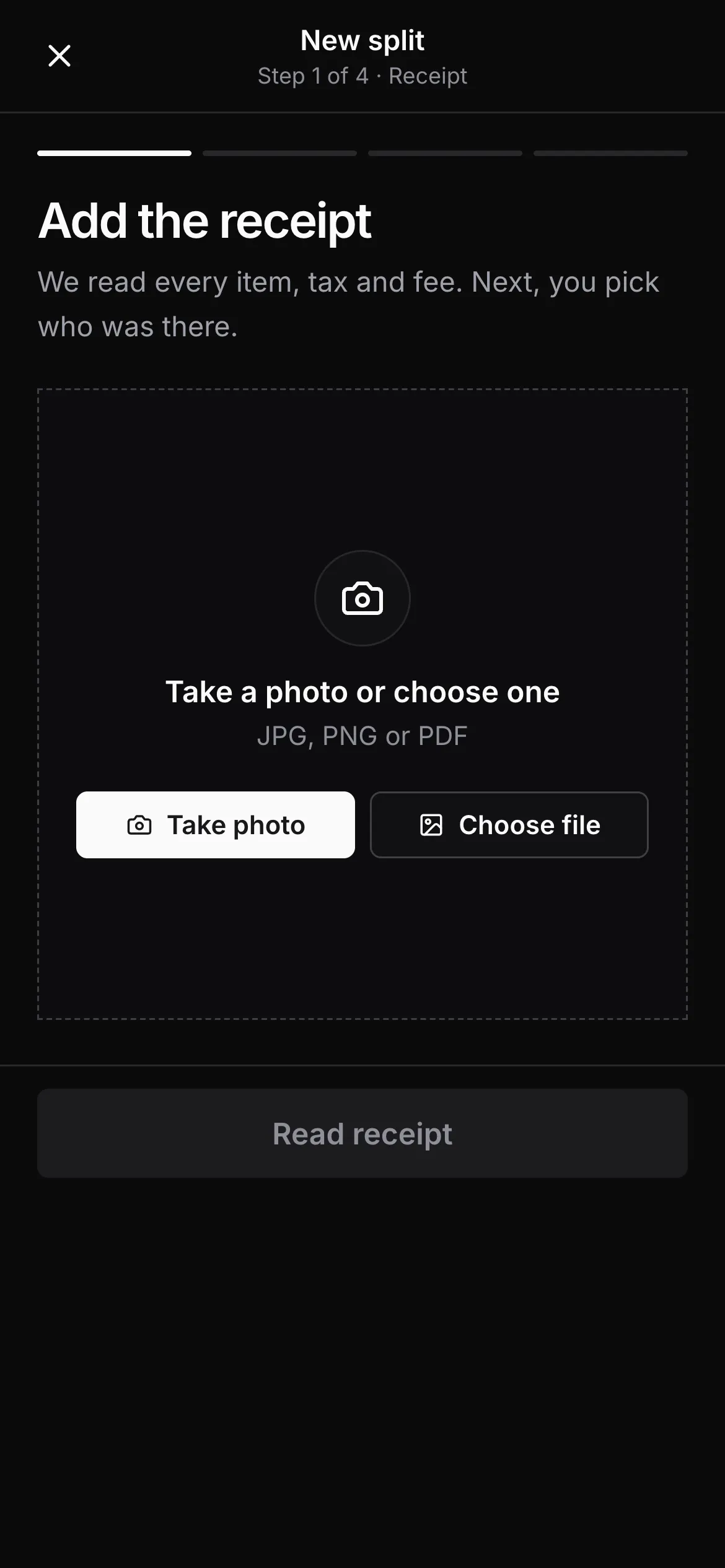
Instead of typing the bill in line by line, you photograph it. The Gemini API reads every item, the tax, the service fee and any discount straight off the image, and anything it misreads is one tap to fix.
A split happens while everyone is still at the table, so the wait matters as much as the accuracy. I optimised the image before it is sent and cut the prompt down to what the model has to return, which brought the overall response time down.
Exact shares, down to the cent
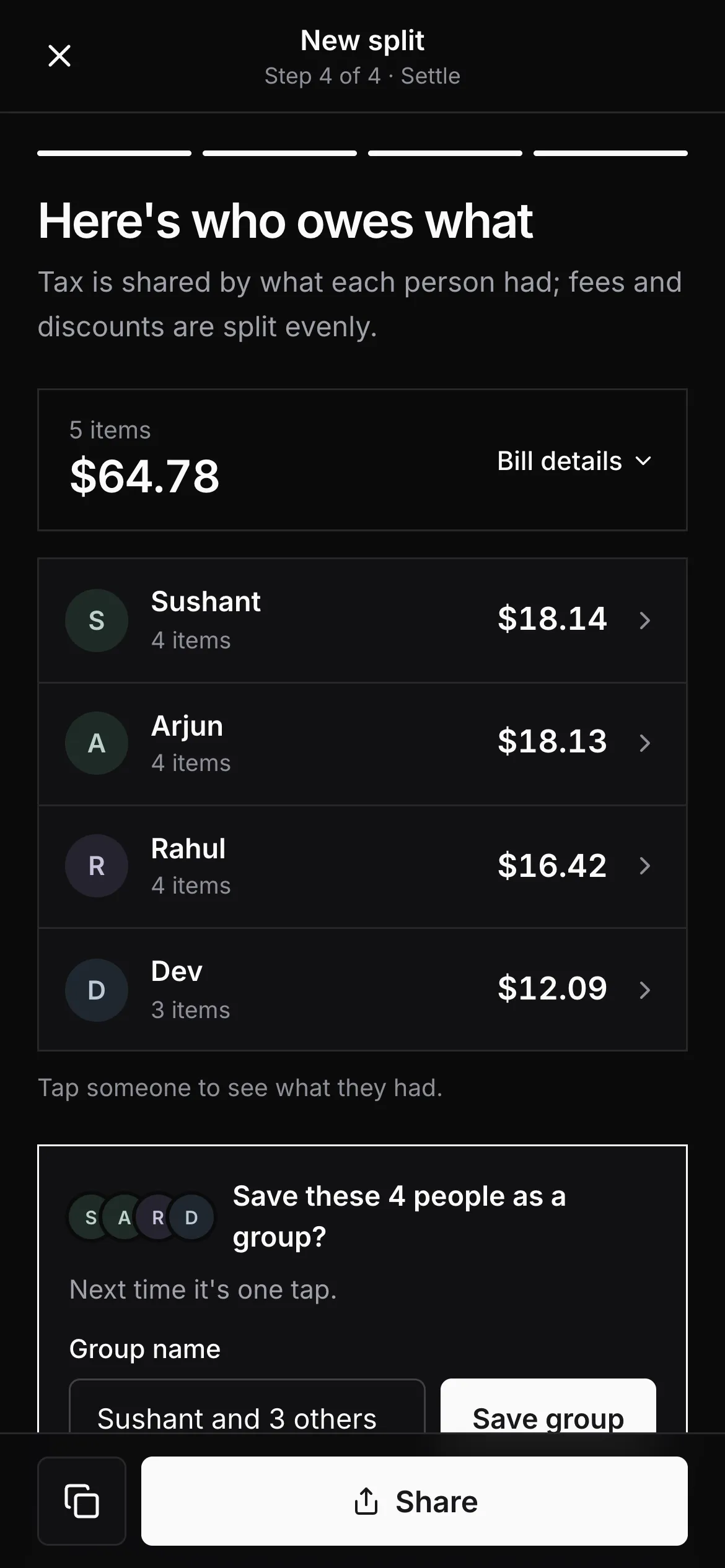
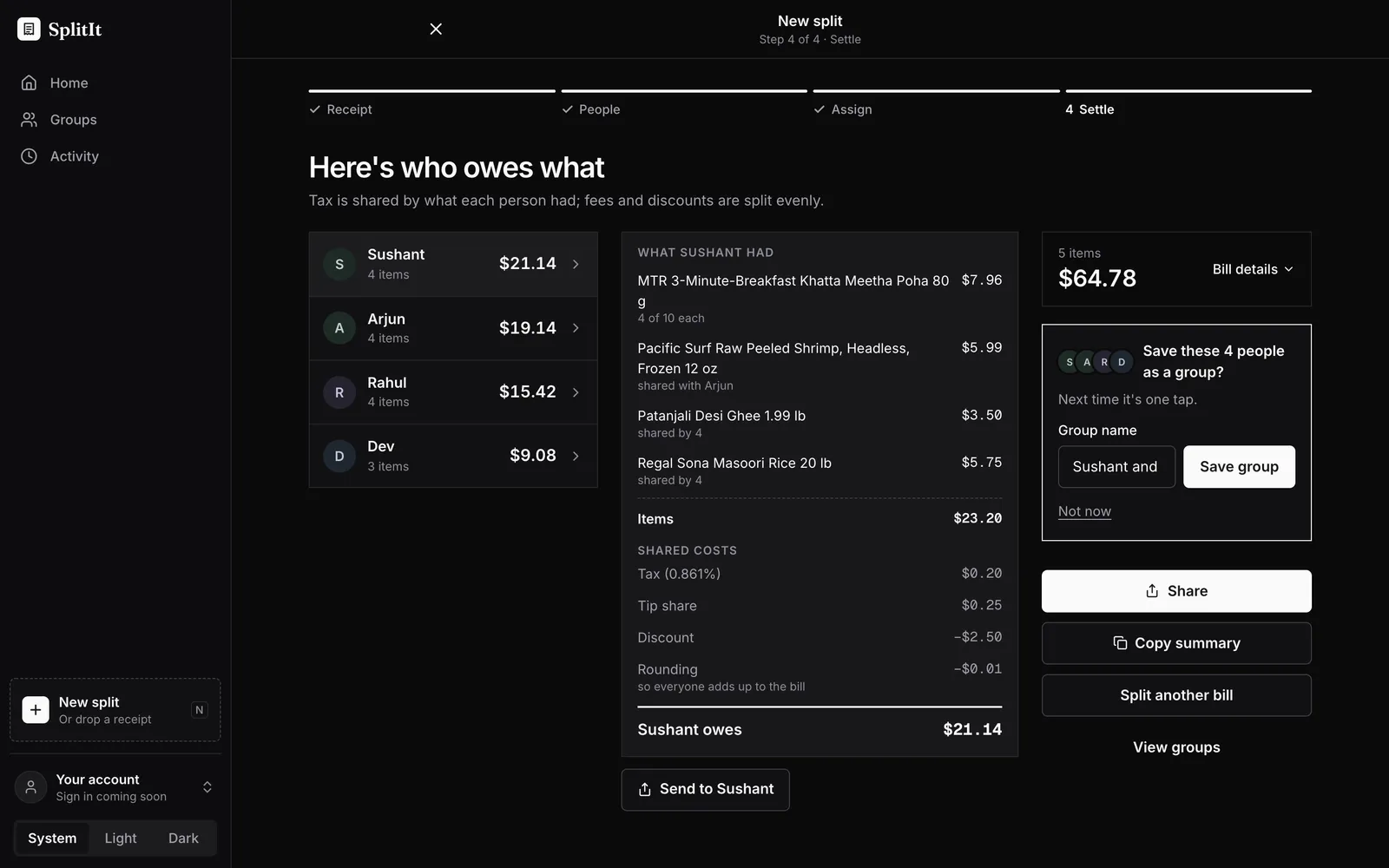
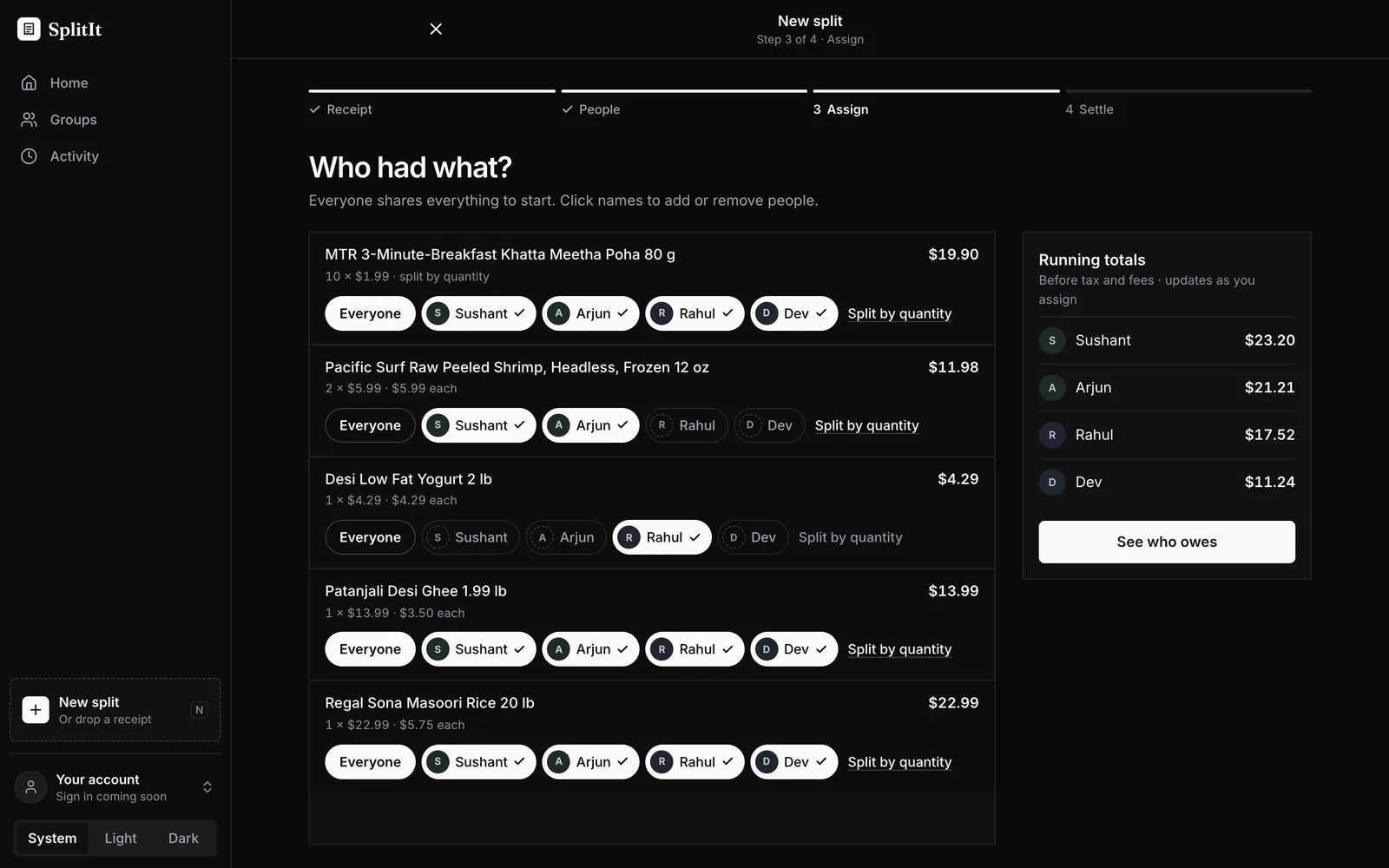
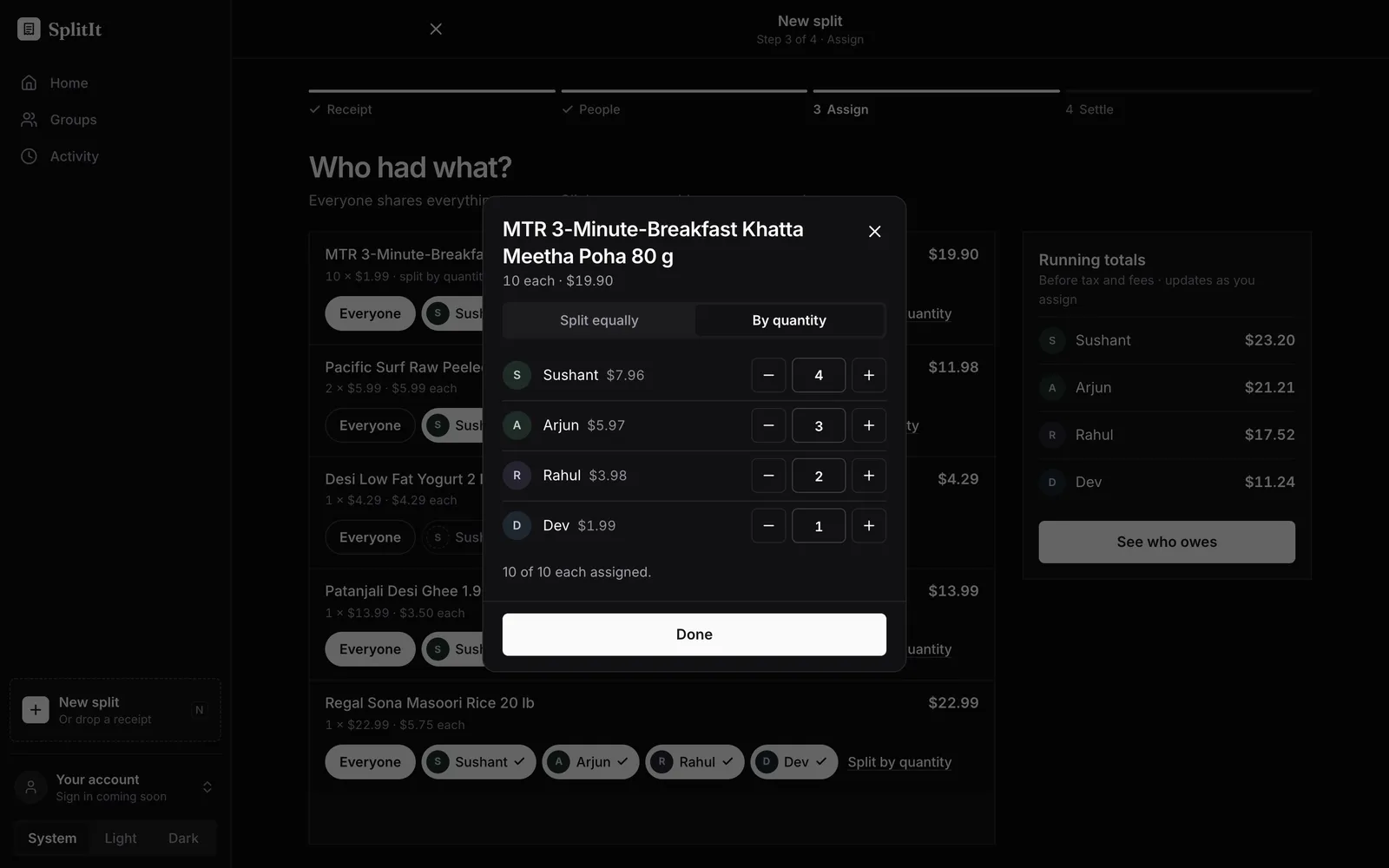
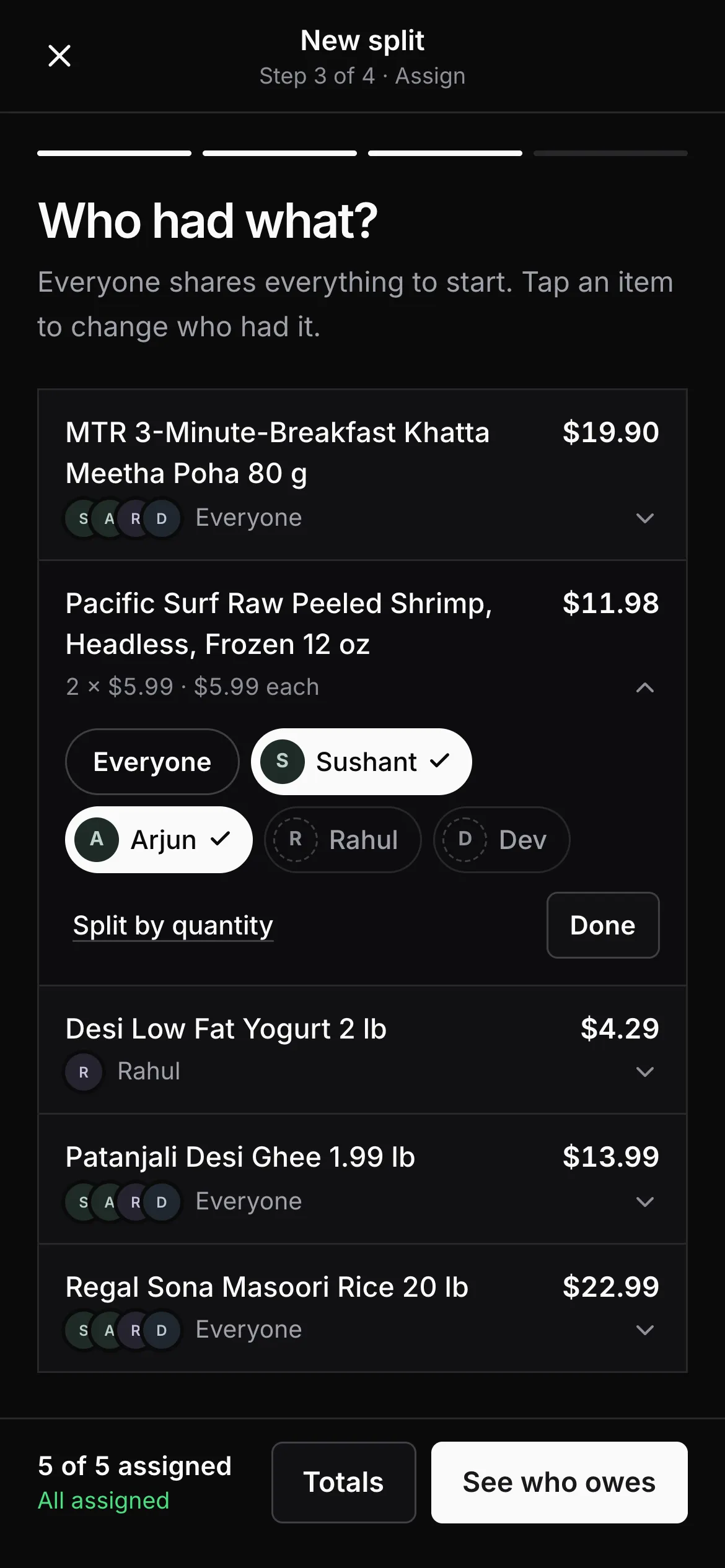
Everyone shares everything to start; a tap on a name takes them off an item. Shrimp for two, yogurt for one, rice for the whole flat. Tax follows what each person had, and the tip and any discount are split evenly.
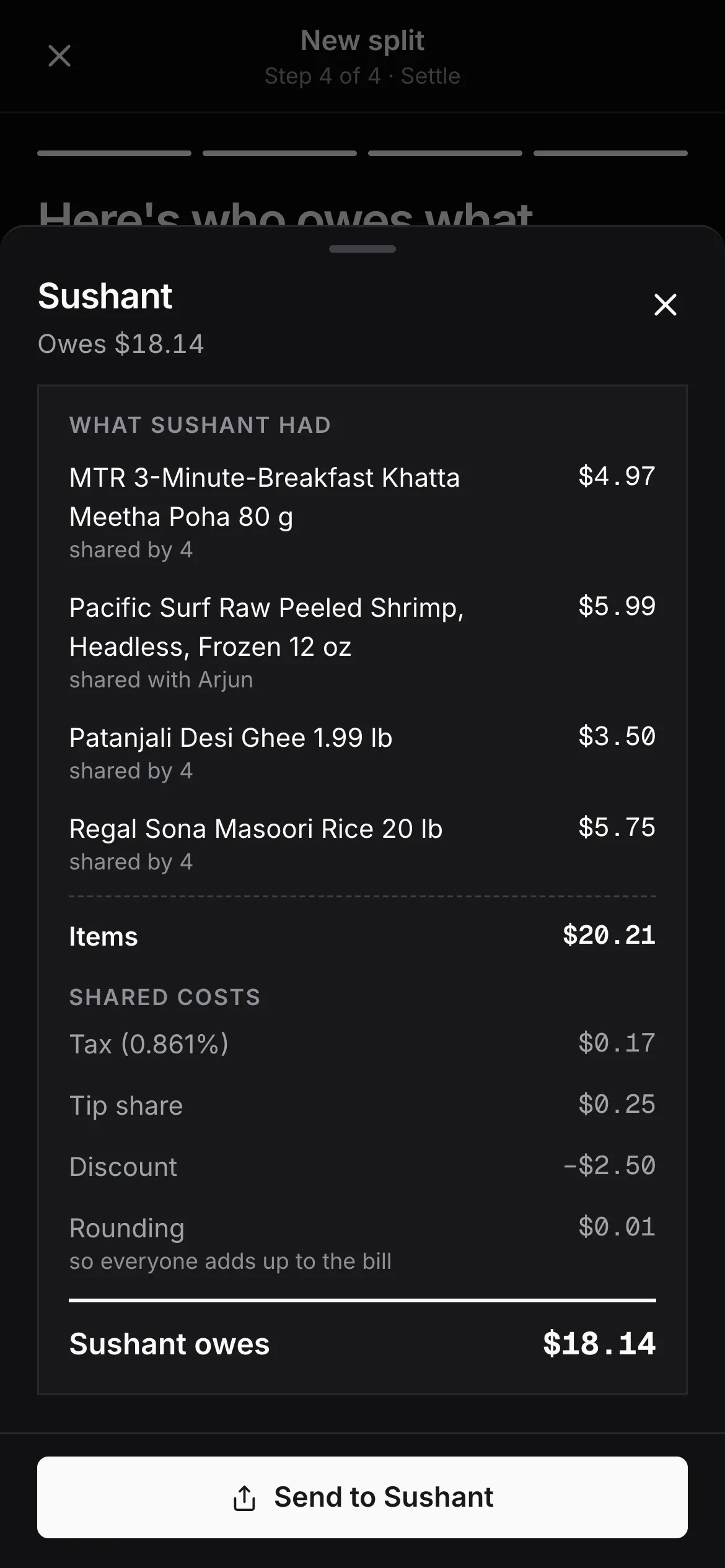
The maths looks simple until the cents have to add up. Split ten dollars three ways and a cent is left over; do it in floating point and the totals quietly drift. I moved the calculation to fixed-point arithmetic, so every share is exact, and the cent that's left over shows up as a rounding line on someone's share, so the shares always add back up to the bill.
Where I learned TypeScript properly
SplitIt is where TypeScript stopped being a layer of annotations for me. The first interface leaned on components I built from scratch, like a MemberAvatarStack that shows who shares an item at a glance, and an assignment table that renders whatever the receipt holds: a row per item, a column per person.
Keeping that table fast is where I went deep on memoization and callbacks: which values to cache, which functions to keep stable, and what a re-render actually costs.
Cheap when idle, ready when busy
The REST API runs serverless on AWS Lambda and API Gateway, paid per request, so hosting stays cheap and scales with use. Underneath is a MySQL schema I designed for accounts, groups, and split records.
In use every day
More than ten people use it every day.
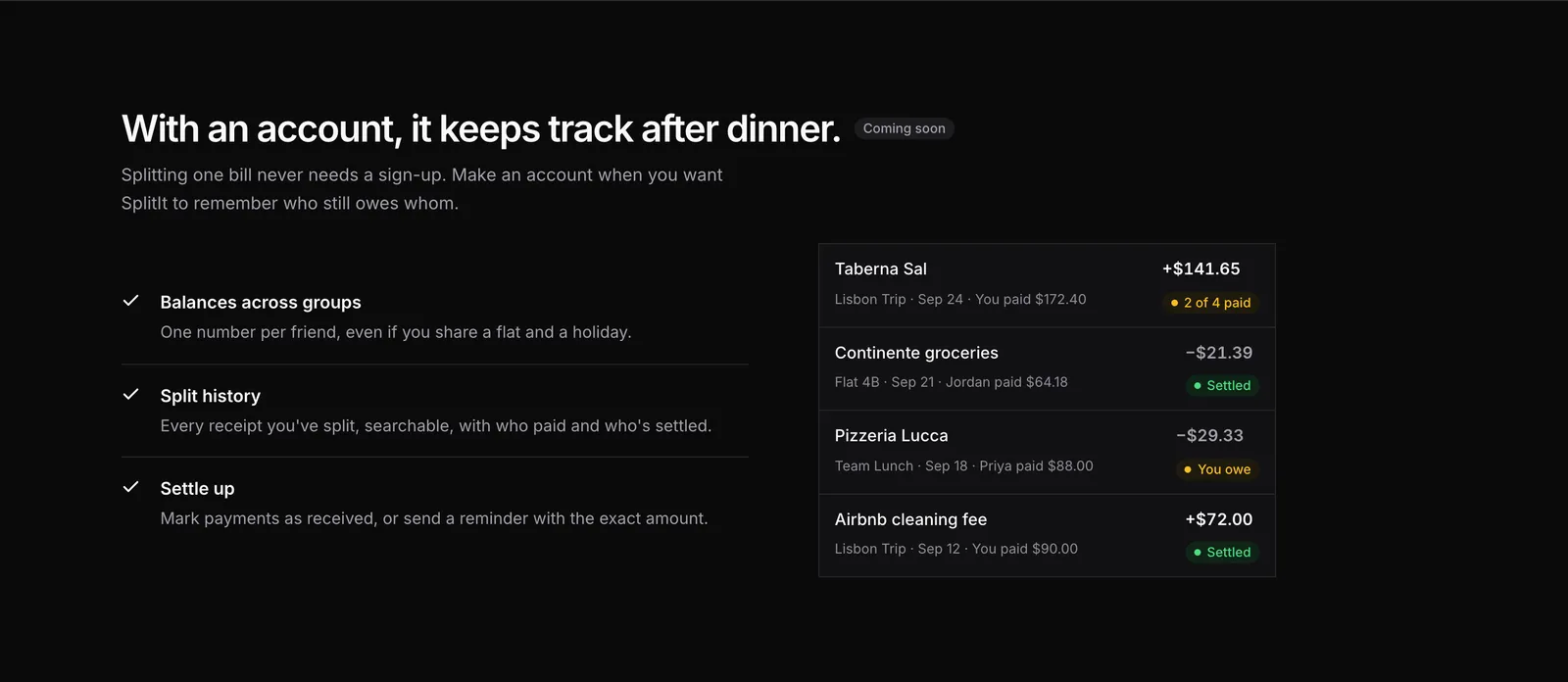
Splitting a bill needs no account. Accounts come next: one balance per friend across groups, a searchable split history, and settling up, so SplitIt remembers who still owes whom.